Showing posts with label Warlockposting. Show all posts

Saturday, March 19, 2022

The Mists Upon the Moor (Patron: The Fae)

For he comes, the human child,
To the waters and the wild
With a faery, hand in hand,
For the world's more full of weeping than he can understand.
—W.B. Yeats, 'The Stolen Child'

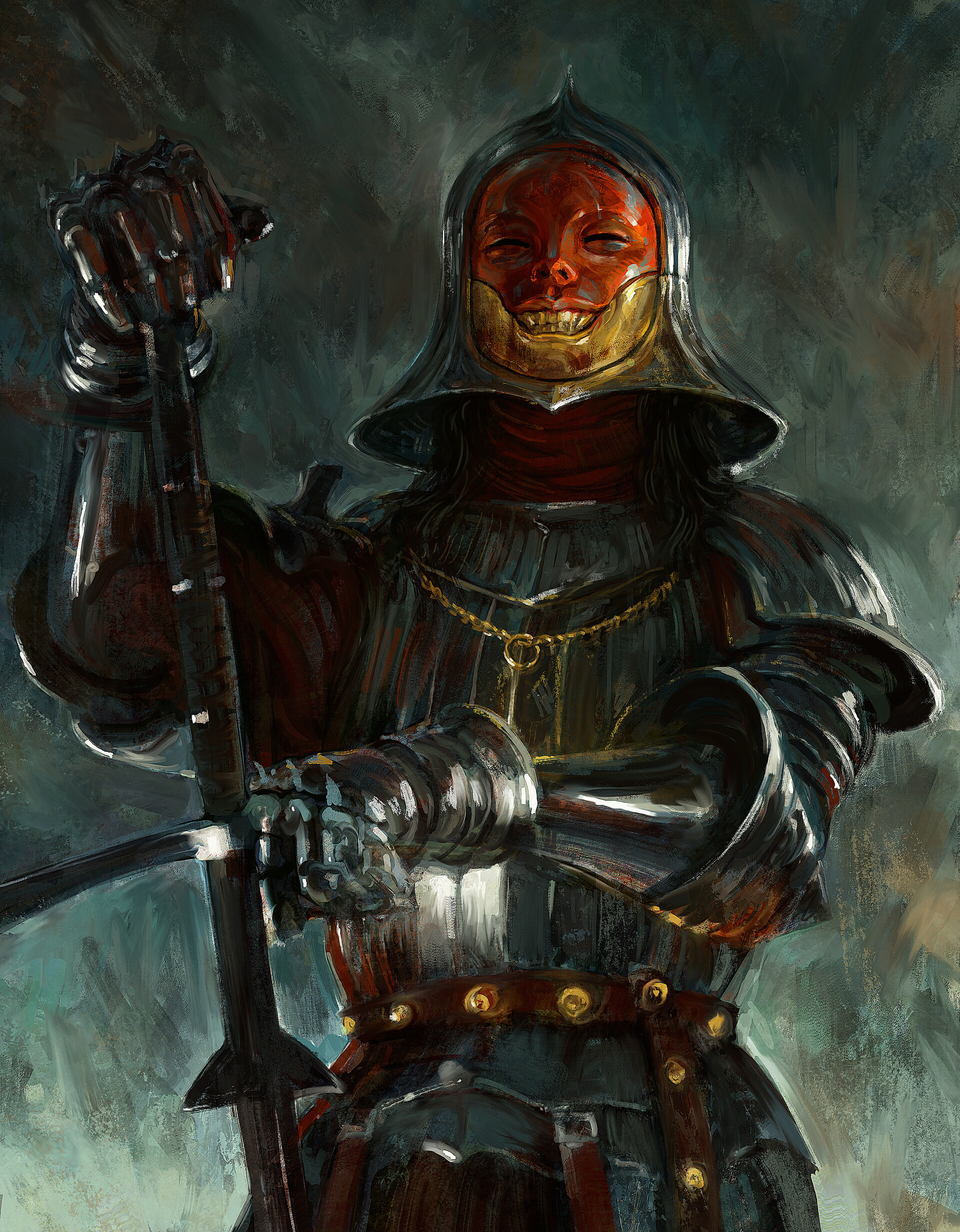
A prince of the Autumn Court, a luchorpán, the Wailing Washerwoman; a denizen of the Otherworld, that half-forgotten realm of mists just beyond the borders of our own, the place below the barrows and beyond the Ironwoods. Inhuman all, with motivations as inscrutable as their nature, the Good Folk live at the fringes of the mortal realm, descendants of those who lost the war for Heaven yet escaped Damnation.

By Jakub Rozalski

Perk: Can see through darkness, and always sense the way to the nearest gateway to the Otherworld.
Drawback: People can tell there's something off about you. Normal mortals are always keen to distrust you.

The boon of your pact looks rightfully not of this world—deeply unnatural colours, just-off proportions, a scent it shouldn't have, &c.

Whether you fell asleep aside a barrow mound, danced too close to the Midsummer bonfire, or followed the fairy light into the heart of the forest, those sworn to one of the Fae are left... changed. The mark you bear takes the form of...
1. Eyelids that close sideways.
2. A forked tongue.
3. Pointed ears.
4. An uncanny stare.
5. Scarlet-red hair.
6. Six fingers on each hand.
7. An unnaturally sing-song voice.
8. A constant sickliness.
9. A permanent, too-wide smile.
10. Each of your eyes is a different, inhuman colour.

Mishaps:
1. 1d6 damage to you.
2. MD only return to your pool on a 1-2 until sunrise.
3. You lose all benefits of your boons for 1d6 rounds.
4. Illusions overtake your mind for 1d6 rounds on a failed save; you see things that aren't there, swiping at nonexistent enemies and dancing to a nonexistent tune.
5. You begin to scream for the next 1d6 rounds; on a 6, so does everyone who can hear you.
6. You lose your voice until you next rest.

Dooms:
1. Your eyes are now white as snow. You cannot keep a secret from those who know your name.
2. Your hair is now white as snow. You cannot disobey those who know your name.
3. Your skin is now white as snow. You feel an overwhelming *itch* to go back to the Otherworld. Home.


Another warlock patron; see this post for context, and either of these for further content. Bits taken from a variety of sources; deus ex parabola's Oberon and Titania most significantly.

Sunday, February 27, 2022

Unwaking from the Dream of Life (The Lich)

Why should a man desire in any way
To vary from the kindly race of men
Or pass beyond the goal of ordinance
Where all should pause, as is most meet for all?
—Alfred Tennyson, 'Tithonus'

A mage, great in power and hubris both, who has overcome Death itself. Trading form for immortality, liches give up their bodies, binding their mind instead to their demesne—a fortress-city, a citadel of bone, perhaps an ancient tower—saving themselves from the tides of time, but binding themselves in place for eternity. Thus, they rely on agents to act on their behalf beyond the borders of their demesne.

By Blake Rottinger

Perk: You speak the tongue of spirits. Passing on decays the mind; corpses often ramble or go on cryptically, and rarely can they recall their deaths.
Drawback: You do not heal naturally. Instead of a ration, you must consume the flesh of a freshly slain creature; broken bones must be replaced with ones scavenged from elsewhere.

The boon of your pact looks as something pulled from a long-forgotten tomb—it might be composed of bone or dark stone, it may look worn with age, it may bear a permanent layer of dust, &c.

All who are sworn to a lich are... twisted, in some way, by their bond. The mark you bear takes the form of...
1. Ghost-pale skin.
2. An ever-present chill.
3. Entirely black eyes.
4. A constant gauntness.
5. A pungent scent of rotting flesh.
6. Permanent bloating.
7. Teeth eerily long and yellow as old bone
8. A different voice, much older than your face.
9. Nothing humans can sense, but animals find you... wrong.
10. One eye that never ceases weeping.

Mishaps:
1. 1d6 damage to you.
2. MD only return to your pool on a 1-2 until sunrise.
3. Random mutation for 1d6 rounds, then make a Save. Permanent if you fail.
4. For the next [sum]*10 minutes, you may see into the realm of spirits and magic directly, but the mortal world is totally dark to you (stolen from Lexi). 
5. 1d6 nearby corpses raise as revenants, eager to attack.
6. Save against your body rejecting your spirit. If failed, your spirit shoots out of you as a ghost - choose which one you're controlling, the other causes mayhem. The ghost can do spells and wizardy shit, the body can and will break things and strangle people (courtesy of Locheil).

Dooms:
1. You die. Your spirit is flung from your body until the next sunrise, and from now on you are as any other undead—your form will begin to rot, and you gain another feature from the d10 table above.
2. As above, but your body's rotting progress more rapidly while you are outside it. Disadvantage on initiative rolls and any checks related to reflexes or speed from now on.
3. As above, but your spirit is cast out forever. Your passing tears a hole in the Veil. 4d8 spirits leak through, possessing nearby corpses where available and hellbent on causing harm.

----------------------------------------------------------------------

A continuation from some earlier posts.

Saturday, July 10, 2021

Don't Forget the Fine Print

I burned my life, that I might find
A passion wholly of the mind,
Thought divorced from eye and bone,
Ecstasy come to breath alone.
I broke my life, to seek relief
From the flawed light of love and grief.
—Louise Bogan, 'The Alchemist'

A follow-up to an earlier post of mine; another patron, another pact.

Patron: The Deep

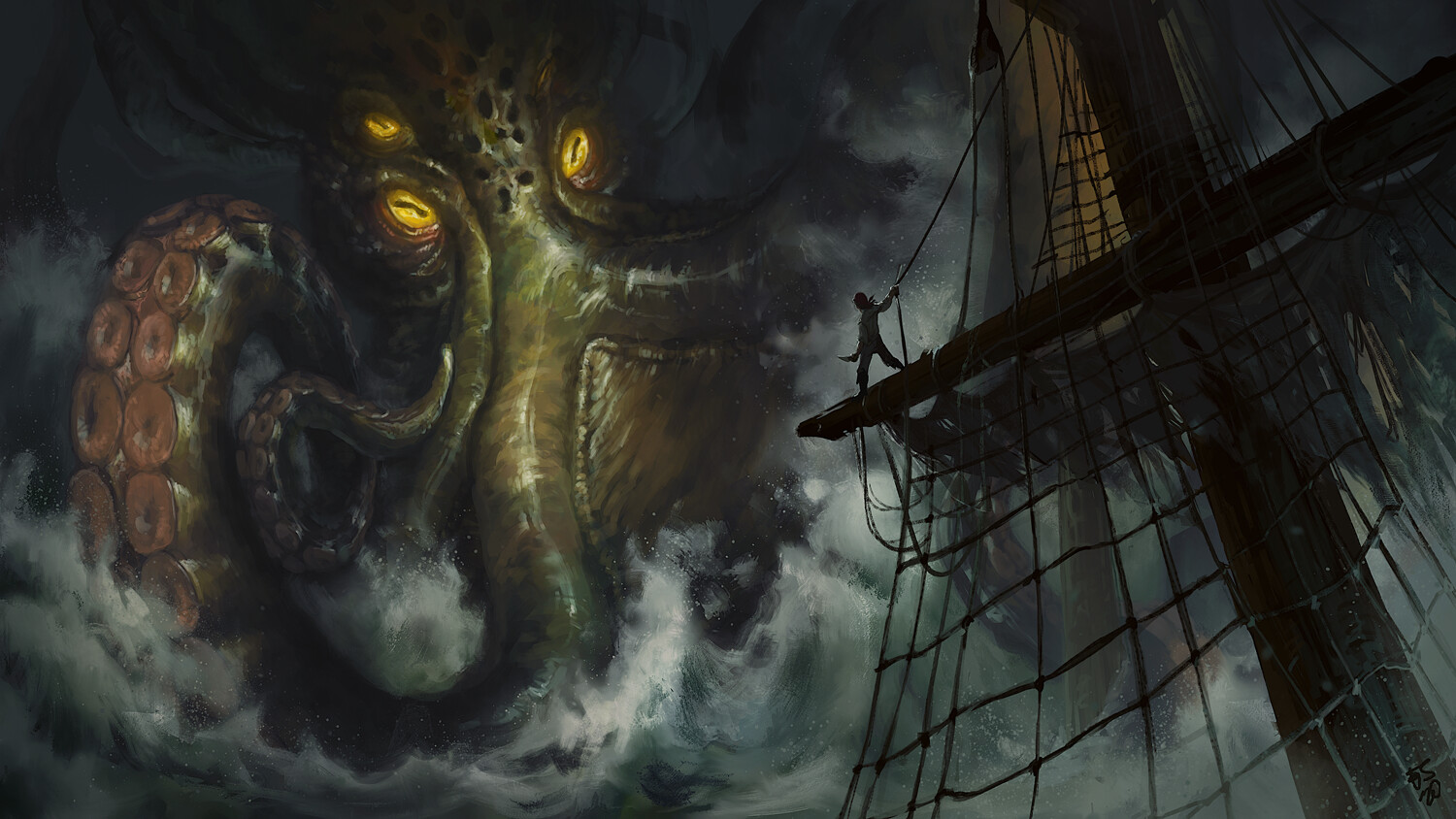
Be it a Great Beast of the Sea, a mighty kraken, or a primordial of the Elemental Ocean, you have bound yourself to some ancient being from creation’s first days. For some masters, you may act as their eyes and ears on the realm of land, advancing whatever esoteric goals they seek; for others, your "master" may be so alien as to be unaware of your mere existence.

By Elisa Serio

Perk: You can communicate with creatures of the water as fluent, and move through marshes and bogs unhindered.
Drawback: You cannot drink fresh water; derivatives thereof—tea, beer, &c—are fine.

The boon of your pact looks as it should for an object of the oceans—dark blues and greys, seaweed dangling off of it, a thin layer of slime, &c.

Those who swear themselves to a being of the Deep carry a sign of their pact. The mark you bear takes the form of...
1. Webbed hands and feet.
2. Translucent, mildly luminescent skin.
3. Fish-like scales.
4. Visible gills.
5. Constantly damp & oily skin.
6. No eyelids.
7. Unnaturally pointed teeth.
8. Unusual pallor.
9. Bulbous swim bladders.
10. Spit solidifies slowly after contact with air.

Mishaps:
1. 1d6 damage to you.
2. MD only return to your pool on a 1-2 until sunrise.
3. Random marine-related mutation for 1d6 rounds. Permanent on a failed save.
4. Lungs temporarily fill with water for 1d6 rounds. Can't speak or cast spells.
5. Grow incredibly thirsty. Must consume a ration at next rest, and receive no healing from it.
6. Vomit 1d100 litres of seawater.

Dooms:
1. Body empties of moisture for 24 hours. Inventory filled with exhaustion, and can't cast spells.
2. As above, but for a week.
3. Tide rises where you stand. 1d20+5 assorted merfolk, water elementals, and bloated corpses appear to drag you out to sea. Fend them off or die.

Pact: The Tome

Where other practitioners take paths of simple-minded violence or request vain gifts, your boon of choice was knowledge—power in its purest form, at least in your eyes. You need not runes nor wands nor incense; you are a spellcaster, capable of imposing your whims on the world as you desire.

A: Spellcasting: You may expend MD to change the world around you, wielding the powers described below. For each Working you perform past the first, add an additional Instability Die—they do not contribute to [dice] or [sum], but do count for the invocation of Mishaps and Dooms. This count resets each sunrise, though a warlock may voluntarily roll extra ID to further empower their workings.

Harm: Deal [sum]+[dice] damage to any target you can see; creatures may Save to negate. This takes a pact-appropriate form—a blast of fire, a sudden gust of lacerating wind, the howling screams of damned souls.
+1 ID for each other Working you've done since sunrise
+1 ID for each additional target

Alter: Make a declarative statement about any target you can see you can see. That statement becomes true for [dice] rounds. It cannot cause damage (Harm), create a new object (Create), or move the target; creatures may Save to negate.
+1 ID for each other Working you've done since sunrise
+1 ID for each additional target
+1 ID to affect an area the size of a wagon
+2 ID to affect an area the size of a cottage
+3 ID to affect an area the size of a village
+1 ID to make the effect last [dice] minutes
+2 ID to make the effect last [dice] hours
+3 ID to make the effect last [dice] days

Create: Create a creature or object. It lasts for [dice] rounds, and begins person-sized or smaller (with 2 or fewer HD if a creature). Creatures created cannot inflict damage and objects may not inflict magic damage or create permanent effects, but may be magical—you can make a flying carpet, but a healing potion will only last the duration listed. A regular sword, not BITTER MARTYR WOE, a well-learned heavy langmesser matte, with a silvered edge that cuts through fire.
+1 ID for each other Working you've done since sunrise
+1 ID for each additional creation
+2 ID to increase the created creature's HD by 4
+1 ID to create an object the size of a wagon
+2 ID to create an object the size of a cottage
+3 ID to create an object the size of a village
+1 ID to create a magical or otherwise notably strange object
+1 ID to make the creation last [dice] minutes
+2 ID to make the creation last [dice] hours
+3 ID to make the creation last [dice] days

A: Ancient Tongues: When you come across a fragment of some long-forgotten language—scrawled on a ruin, carved into a talisman, &c.—you have a [templates]-in-6 chance of understanding it. Not the entire language, but enough for that piece.

B: Intuitive Understanding: You can read any text—fine print included—in the time it's taken you to read this description.

C: Accurate Insight: By staring very deeply into someone's eyes, you may read their thoughts, quite literally printed on their pupils; it's there for everyone, but the text is very small (credit to Archon).

D: Spell-Theft: You may cast any spell you come across in another magic-user's grimoire or the mind of one you've killed without rolling or incurring ID. Your Mishaps and Dooms may still apply; spells cast this way once are rendered unusable.


The Magic-User to the Blade's Fighting-Man. Thanks to Sundered for the name; here's the patron you asked for in return. Feedback appreciated, &c., &c.—more patrons and pacts to come.

Sunday, May 9, 2021

Written in Blood

Warlocks. Foul creatures, born of human stock and bound to some higher being for power. Each is defined first by patron and second by pact; the entity to which they owe their power, and the gifts they receive.

You and your compatriots are some such wretched beings.

Michael Maier

At each level, warlocks gain a Magic Die, a d6 representative of some shred of power or minor favour owed to you. Some pact abilities give you the opportunity to roll them. [dice] is the amount of MD you commit, [sum] is the total of all results. MD are expended on a 4-6; dice that roll lower return to your pool to be rolled anew. Whenever you roll doubles, consult your patron's Mishap table; the corresponding result occurs (double sixes result in the sixth entry, double threes the third, &c.).

All warlocks are fated to meet their demise. Whenever a Mishap occurs, note it. Whenever you make the third strike, a Doom is invoked—some greater catastrophe. As with Mishaps, the exact consequences depend on your choice of patron. Few, if any, survive their third Doom.

Patron: The Fiend

Hob. Old Scratch. The Devil. The Fiend bears a thousand names in as many different tongues, but all refer to the same being—the lord themself of the lower planes. They seek to bring out the worst in humanity; violent, impulsive, brutal. All in their thrall embody these virtues, in one way or another.

Michal Kváč

Perk: Can summon a flame as that of a candle with a snap of the fingers.
Drawback: Sacred objects burn to touch.

The boon of your pact—book, sword, or servant—looks as an object of the Hells should. Earthen or crimson tones, a charred scent, wicked spikes, infernal inscriptions.

To forge a pact with the Fiend—whether you sought it out, or it was brought to you—one must take a dip in the fires of the underworld. Few pilgrims make it through unscathed. The mark you bear takes the form of...
1. A marred face.
2. Eyes turned an unnatural shade.
3. A pair of horns jutting from your forehead.
4. An arm-length tail.
5. A shadow twice the length it should be.
6. Breath that reeks of brimstone.
7. A network of scars across your forearms.
8. Bodily fluids (blood, sweat, tears, &c) the deepest black.
9. Nails as sharp as claws.
10. An extra set of canine teeth, jutting out of your mouth.

Mishaps:
1. 1d6 damage to you.
2. MD only return to your pool on a 1-2 for 24 hours.
3. You lose all benefits of your boons for 1d6 rounds.
4. Random hellish mutation for 1d6 rounds. Save with advantage or permanent.
5. Fire spurts out from you. 1d6 damage to you and everything within 2 metres.
6. An imp pops into existence. They seek to cause maximum mischief for those around them until killed and can summon minor illusions—cause flames to flicker or dim, slam open doors shut, call forth harmless tremors, &c.

Dooms:
1. Die for a day. Your soul is taken temporarily to the Underworld, for fiends to do with as they please.
2. As 1, but for the person you care about most in the world.
3. As 1, but for eternity.

Pact: The Blade

You have chosen a path of violence. Your boon takes the form of a weapon of your choice—dagger, sword, axe, &c. You are as skilled with it as any other combatant, and are bound to the blade as much as it is to you.

Gilles Ketting

A: Boon of the Blade: You have taken a weapon of your choice as the object of your pact. It counts as magical, its appearance influenced by your choice of patron. It vanishes into nothing when separated from your or at a moment's thought, and you can summon it from the aether with 10 heartbeats of concentration (a single action in combat).

A: Bloodthirsty Edge: Whenever you make a successful attack against an enemy, you may roll any amount of MD. If you choose to do so, the attack inflicts an extra [dice] damage. Upgrades to [sum] at C.

B: Deft Hands: You've grown more comfortable in your weapon. You never fail to do things with it other than attack—disarming enemies, tripping foes, striking them with the flat of the blade, &c.

C: Indomitable: Your body has improved, infused further with magic. You can roll MD when making saves to add an additional [sum] to your result; whenever you step out of the fight for a moment to take a breather, you may regain [dice] health rather than the norm. 

D: Flurry of Steel: You have been gifted a preternatural speed in combat. You can make two attacks with your pact weapon on each of your turns without penalty. 


The beginnings of a potential hack, of sorts, replacing the 'race'/class dichotomy with patron and pact. Hopefully makes a degree of sense. Feedback of all forms appreciated—as are riffs on the same concept.